Drop a year for NEET if you have a clear reason your last attempt fell short, you are willing to change how you prepare, and you have weighed the courses your current score already opens. Repeating the same year the same way rarely changes the result.
If you are reading this after a NEET result that did not go the way you hoped, start here: a repeat year is a choice, and not getting a seat is not a verdict on your ability. Many students who become fine doctors took more than one attempt. Many others found their place in healthcare through a different course, and are glad of it.
The question is not whether repeating is good or bad. The question is whether repeating is right for you, now. Here is how to think it through.
Step 1: Look at your score honestly
Write down your score and your All India Rank. Then look up what that rank could get you in this year's counselling, not just in MBBS but across the courses NEET opens: BDS, BAMS, BHMS, BSc Nursing through NEET, BVSc and others. Our guide to NEET marks for MBBS in Karnataka shows the 2026 closing ranks.
As of 2026, about 20 lakh candidates appeared for about 1.37 lakh MBBS seats, about 28,000 BDS seats and about 53,000 AYUSH seats. Ranks, not raw marks, decide seats, because papers differ in difficulty from year to year.
Step 2: Find the real reason
Ask yourself, and answer on paper: why did the last attempt fall short? Common reasons include:
- Daily travel that ate study time
- A phone that ate evenings
- Re-reading chapters instead of testing yourself
- Tests written, marks noted, mistakes never corrected
- Too little sleep before the exam
- Panic or poor time management in the hall
- A late start, or a syllabus never finished
If you can name your reasons, a repeat year can fix them. If you cannot, a repeat year is likely to repeat them.
Step 3: Ask whether you will change how you prepare
A repeat year that is a copy of the last one, with more hours, rarely works. What changes results is a change in habits, attitudes and mindset: fixed sleep, no phone, testing yourself without looking, analysing every test, and a plan for every day.
Ask: am I willing to live differently for one year?
Step 4: Weigh the other doors honestly
Repeating is one option. Others include:
- BDS, if your rank allows, for students who want clinical practice.
- AYUSH courses (BAMS, BHMS), which lead to doctors who heal, with growing government and private roles.
- BSc Nursing, with strong demand in India and abroad.
- Allied health courses, outside NEET in most states, in physiotherapy, laboratory medicine, optometry and more.
Becoming a healer is not limited to MBBS. A student who joins another healthcare course with a sense of service is on the path of a doctor.
Step 5: Count the cost of the year
A repeat year costs money, a year of age, and emotional energy. It also brings stress for the family. Talk openly as a family about what you can afford, and about how you will support each other if the next result is also disappointing.
A simple decision guide
| If this is you | Consider |
|---|---|
| Your score was close, and you can name what went wrong | A repeat year, with a changed method |
| Your score opens a course you would genuinely like | Taking that seat |
| You are unsure you want medicine at all | A pause to decide, before committing a year |
| You want to repeat but cannot change your environment at home | A residential programme |
| You feel low, hopeless or exhausted | Talk to someone first; decide later |
Should I join coaching in my drop year?
Some students prepare well alone. Most repeaters benefit from structure: a timetable, regular full-format tests, and someone checking that mistakes are corrected. The right question is not "coaching or self-study?" but "what will make me change how I prepare?" For many, the answer is a residential year with no travel and no phone.
What a repeat year should feel like
It should feel like a fresh start, not a punishment. At RIMA we describe it as a tapas: a year of disciplined, devoted effort, with sleep, food, yoga and sport protected, and doctors as mentors. Our note to repeaters explains how the year is built.
If you are struggling right now
Results can hurt deeply. If you feel hopeless or overwhelmed, please talk to a parent, a teacher or a counsellor today. You can call Tele-MANAS on 14416, free and at any time. There is no decision about NEET that cannot wait a few days while you look after yourself.
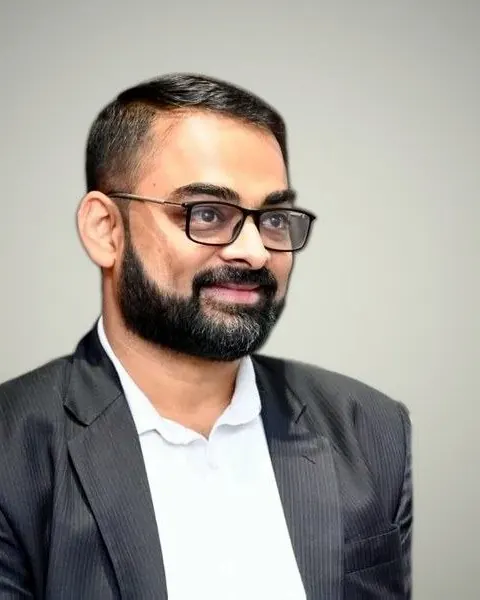
Dr Varun Murthy, MBBS (Kempegowda Institute of Medical Sciences, Bengaluru)
A doctor who left clinical work to build schools and study systems. Founder of Rebuild India Medical Academy and designer of the 16-point Success Blueprint.